
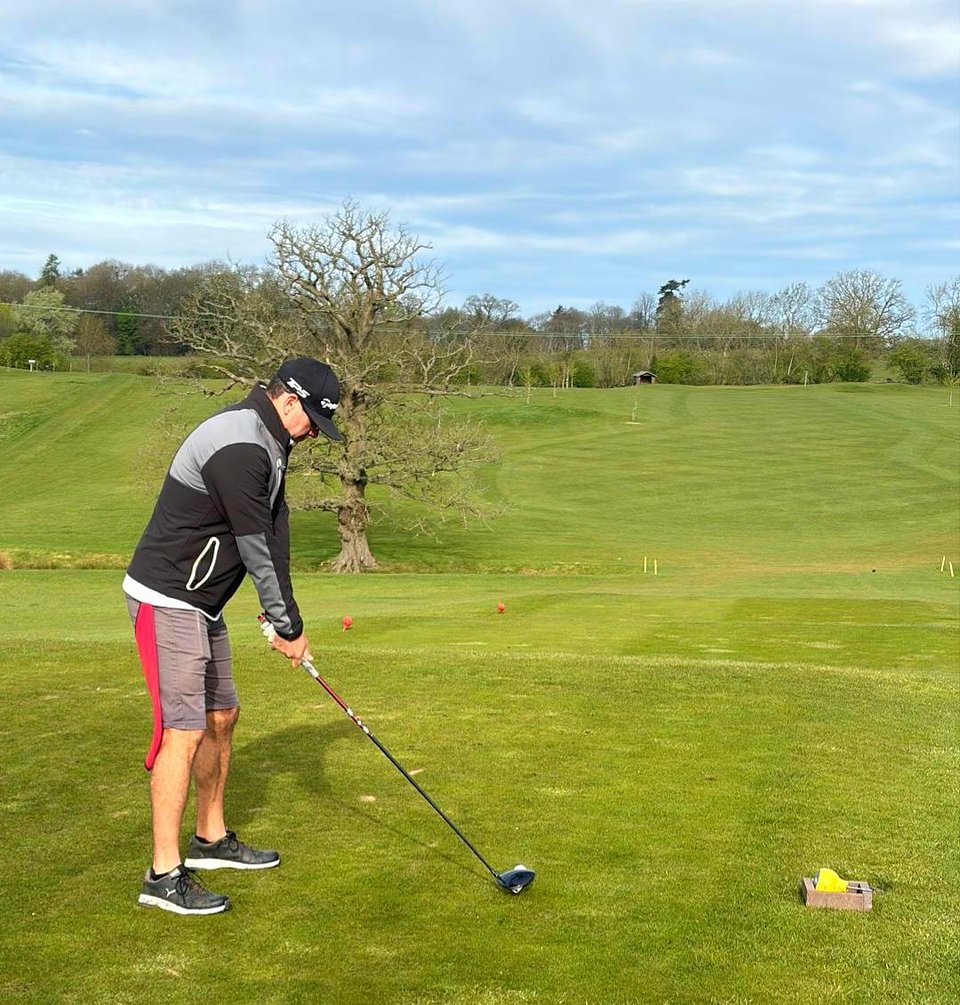
Spencer Wood is hooked on golf – a self-proclaimed golf geek who combines his background in software, data, and high-performance sport with an obsessive love for the game.
In 2025 alone, Spencer played nearly 3,000 holes, hit over 10,000 shots, and clocked up 4.3 million steps – all through golf. The 45-year-old, based at Stowe Golf Club, managed this while working full-time in a senior software role, squeezing golf in around work and loving every minute of it.
To put his dedication into perspective, Spencer submitted 215 general play scores in 2025. The national average for male golfers in England? Just 11.69.
We caught up with the 8.1-handicapper to understand the obsession.
In 2025 alone, Spencer played nearly 3,000 holes, hit over 10,000 shots, and clocked up 4.3 million steps – all through golf. The 45-year-old, based at Stowe Golf Club, managed this while working full-time in a senior software role, squeezing golf in around work and loving every minute of it.
To put his dedication into perspective, Spencer submitted 215 general play scores in 2025. The national average for male golfers in England? Just 11.69.
We caught up with the 8.1-handicapper to understand the obsession.

What was your target for 2025?
“I wanted to get to single figures and I finally reached that goal on 1st April 2025 and have managed to sustain it. I had a low index of 6.6 during the year and finished at 8.4. I blame the wet UK weather during early winter – and worn-out grips!”
How do you manage to play so much golf?
“I fit golf around work – early mornings, summer evenings, and weekends. I’m a software manager by day, with a background in telemetry. I’m a general analytics geek with OCD tendencies and an eye for detail. I have spreadsheets for everything – including tracking what’s in the freezer.
What does a typical golf day look like?
"If I can, I play every day. Stowe is a beautiful nine-hole course, which suits me perfectly as I can usually only get nine holes in either before or after work. I’ll get up around 6:30am, head to the course, warm up in the nets, do some putting, and get the earliest tee time so I’m home by 9:00am. The course is only a 10-minute drive away. My regular morning playing partner Paul, is 25 years older than me. It’s an unlikely pairing, but we know each other’s games inside out and push each other on. We celebrated our 100th round together last year, he’s been generous with his knowledge and I’ve learnt a lot from him. Golf’s brilliant for that – I’ve met people of all ages and backgrounds. We are playing in the upcoming Creator Championship together, another goal for the year. Before I leave home, I’ll check work emails and connect with team members in India who are already online. At the end of the day, the Americans are still working, but if meetings allow, I’ll head back out for twilight golf in the summer. Because the course is shared with Stowe School, afternoons are usually off-limits, so my next chance is from about 6pm.”
How did you first get into golf?
“I played casually about 25 years ago with my dad at North Oxford. No membership, no official handicap. You’d drop a scorecard into a box and wait weeks for an updated handicap posted on a noticeboard, or so I heard. Now you enter your score on the MyEG app and see it update at midnight. I’ve stayed up watching it change live! I drifted in and out of the game for years, sometimes playing a handful of times a year, sometimes not at all. I hadn’t touched a golf club for at least 10 years before getting back into it properly. The last couple of years are when I started asking: How good can I actually get?”
So what sparked the comeback?
“I was new to the area and working fully remote after COVID. Some days the only people I’d see were the postman and the gardener, who I befriended, and he invited me to play – that’s how it restarted in summer 2023.“I was using the same old clubs that had been gathering dust in the garage. The grips had perished. After two holes my hands were black and sticky. By the end, so were the balls, my phone, and even my face! The solution? New clubs – and a club membership. I joined because it made financial sense, then played even more to justify the cost. According to my spreadsheet, I’ve saved over £14,000 in green fees so far. That box is well and truly ticked. With a handicap in place, competitions followed. I just threw myself into it, playing with people I didn’t know. From there my circle grew, and now I’ve got many regular playing partners. Goals quickly multiplied. First lesson, first birdie, first eagle, first bogey-free round, first level-par round. I’ve treated the whole thing as a project.”
“I wanted to get to single figures and I finally reached that goal on 1st April 2025 and have managed to sustain it. I had a low index of 6.6 during the year and finished at 8.4. I blame the wet UK weather during early winter – and worn-out grips!”
How do you manage to play so much golf?
“I fit golf around work – early mornings, summer evenings, and weekends. I’m a software manager by day, with a background in telemetry. I’m a general analytics geek with OCD tendencies and an eye for detail. I have spreadsheets for everything – including tracking what’s in the freezer.
What does a typical golf day look like?
"If I can, I play every day. Stowe is a beautiful nine-hole course, which suits me perfectly as I can usually only get nine holes in either before or after work. I’ll get up around 6:30am, head to the course, warm up in the nets, do some putting, and get the earliest tee time so I’m home by 9:00am. The course is only a 10-minute drive away. My regular morning playing partner Paul, is 25 years older than me. It’s an unlikely pairing, but we know each other’s games inside out and push each other on. We celebrated our 100th round together last year, he’s been generous with his knowledge and I’ve learnt a lot from him. Golf’s brilliant for that – I’ve met people of all ages and backgrounds. We are playing in the upcoming Creator Championship together, another goal for the year. Before I leave home, I’ll check work emails and connect with team members in India who are already online. At the end of the day, the Americans are still working, but if meetings allow, I’ll head back out for twilight golf in the summer. Because the course is shared with Stowe School, afternoons are usually off-limits, so my next chance is from about 6pm.”
How did you first get into golf?
“I played casually about 25 years ago with my dad at North Oxford. No membership, no official handicap. You’d drop a scorecard into a box and wait weeks for an updated handicap posted on a noticeboard, or so I heard. Now you enter your score on the MyEG app and see it update at midnight. I’ve stayed up watching it change live! I drifted in and out of the game for years, sometimes playing a handful of times a year, sometimes not at all. I hadn’t touched a golf club for at least 10 years before getting back into it properly. The last couple of years are when I started asking: How good can I actually get?”
So what sparked the comeback?
“I was new to the area and working fully remote after COVID. Some days the only people I’d see were the postman and the gardener, who I befriended, and he invited me to play – that’s how it restarted in summer 2023.“I was using the same old clubs that had been gathering dust in the garage. The grips had perished. After two holes my hands were black and sticky. By the end, so were the balls, my phone, and even my face! The solution? New clubs – and a club membership. I joined because it made financial sense, then played even more to justify the cost. According to my spreadsheet, I’ve saved over £14,000 in green fees so far. That box is well and truly ticked. With a handicap in place, competitions followed. I just threw myself into it, playing with people I didn’t know. From there my circle grew, and now I’ve got many regular playing partners. Goals quickly multiplied. First lesson, first birdie, first eagle, first bogey-free round, first level-par round. I’ve treated the whole thing as a project.”
Why does golf appeal to you so much?
“As a geek, golf ticks so many boxes. Technology, equipment evolution, GPS, rangefinders, shot tracking, launch monitors, apps, data, instant feedback – none of that existed 25 years ago. I watch a lot of YouTube golf, which didn’t exist back then either. I used to play Mario Kart on the Super Nintendo. Time trials were my thing. You’d race against a ghost representing the current best effort – restarting over and over for the perfect lap. Golf’s the same, competing against yourself, except you can’t restart. If you hit it out of bounds on the first tee, you have to grind through the round, live with the damage and then wait until tomorrow to try again.”
What keeps you logging so many scores?
“It’s simple: the Handicap Index® is king. It’s the one number everyone understands, golfer or not. What’s your handicap? is often one of the first questions someone might ask. I collect loads of metrics – graphs, targets, monthly goals – but the handicap is the ultimate validation. It only changes if you put cards in, so that’s what I do. It’s soul-destroying when it goes the wrong way. All this golf is also sole-destroying on the shoes. For those interested: 12 pairs of shoes, 30+ gloves, and 500+ balls and counting! I worked in Formula One for years. That world is all about data, marginal gains, learning from mistakes, existing to win, and continuous improvement. That mindset carries straight into golf – as well as into my current day job. The England Golf app adds an extra layer of accountability. When I’ve had a good round, it’s not uncommon to get congratulatory messages from other golfers who’ve checked the app. The validation is nice.”
Isn’t that a lot of pressure?
“I wanted to eliminate daily decision-making. People say things like ‘I’ve got a bad back’ or ‘the weather’s bad’ or ‘I had a lesson yesterday’ as reasons not to submit a score. When do you submit? When you feel lucky? When you feel the score might ‘go green’? How would I feel if I had a great round and hadn’t logged a scorecard intent from the off? If I’m playing with someone who can sign me off, I submit. That way my handicap reflects current conditions and my current level. There’s no debate on the first tee. Less noise, more focus. For better or worse, the playing history is recorded.”
“As a geek, golf ticks so many boxes. Technology, equipment evolution, GPS, rangefinders, shot tracking, launch monitors, apps, data, instant feedback – none of that existed 25 years ago. I watch a lot of YouTube golf, which didn’t exist back then either. I used to play Mario Kart on the Super Nintendo. Time trials were my thing. You’d race against a ghost representing the current best effort – restarting over and over for the perfect lap. Golf’s the same, competing against yourself, except you can’t restart. If you hit it out of bounds on the first tee, you have to grind through the round, live with the damage and then wait until tomorrow to try again.”
What keeps you logging so many scores?
“It’s simple: the Handicap Index® is king. It’s the one number everyone understands, golfer or not. What’s your handicap? is often one of the first questions someone might ask. I collect loads of metrics – graphs, targets, monthly goals – but the handicap is the ultimate validation. It only changes if you put cards in, so that’s what I do. It’s soul-destroying when it goes the wrong way. All this golf is also sole-destroying on the shoes. For those interested: 12 pairs of shoes, 30+ gloves, and 500+ balls and counting! I worked in Formula One for years. That world is all about data, marginal gains, learning from mistakes, existing to win, and continuous improvement. That mindset carries straight into golf – as well as into my current day job. The England Golf app adds an extra layer of accountability. When I’ve had a good round, it’s not uncommon to get congratulatory messages from other golfers who’ve checked the app. The validation is nice.”
Isn’t that a lot of pressure?
“I wanted to eliminate daily decision-making. People say things like ‘I’ve got a bad back’ or ‘the weather’s bad’ or ‘I had a lesson yesterday’ as reasons not to submit a score. When do you submit? When you feel lucky? When you feel the score might ‘go green’? How would I feel if I had a great round and hadn’t logged a scorecard intent from the off? If I’m playing with someone who can sign me off, I submit. That way my handicap reflects current conditions and my current level. There’s no debate on the first tee. Less noise, more focus. For better or worse, the playing history is recorded.”

How hard do you find golf?
“I usually get good at things quickly. Golf, however, is kicking my butt. It’s probably the hardest game of all. You can hit a great shot and get a terrible outcome. It’s brutal, mentally crushing at times, but that’s the appeal. A record score one day, then it all goes horribly wrong the next. If it were easy, I’d have cracked it by now and moved on. A 147 break in snooker, a nine-dart finish, isolated hole-in-ones, they’ve been done many times. No one has ever come close to shooting a round of 18 in golf. Perfection is impossible – but chasing it is the fun. I play great midweek, then Sunday comes for competitions and I put pressure on myself. I get nervous. I’ve only won a couple of events in the last year. There’s a mental element I need to overcome.”
Does golf help your health?
“Absolutely. My job can be stressful at times. I get periods of anxiety and high heart rate, especially in the morning and often for reasons I don’t fully understand. I tend to get up immediately when my alarm goes off, as an alternative to staying in bed unable to get back to sleep with a pounding heart rate. Getting up, getting out, walking in nature, focusing on golf – it helps both physically and mentally. It clears my head.”
What are your goals for 2026?
“I’m fully committed to being the best I can be. I’ve invested heavily in lessons, equipment and time. I watch and consume everything I can: books, podcasts, the PGA Tour on TV as well as YouTube. Peter Finch, Rick Shiels, and Dan Grieve are my heroes. A Handicap Index of 5 or below. That’s the measure of success this year. Alongside that are the usual performance metrics: longer drives, more fairways and greens hit, improved up-and-down percentage, fewer three-putts and doubles, more birdies – and, ideally, a first hole-in-one. I’m a consistent Shot Scope user, comparing my data to a 5-handicap benchmark is powerful. Almost every metric improved from 2024 to 2025, so further incremental gains feel achievable for the current season. I intend to make 2026 my best year yet. Effort in usually equals results out – sadly golf doesn’t always agree – but that’s what makes it such a great and infuriating game. I may not be the best golfer, but if the number of rounds completed is anything to go by, perhaps you could say I tried the hardest!”
“I usually get good at things quickly. Golf, however, is kicking my butt. It’s probably the hardest game of all. You can hit a great shot and get a terrible outcome. It’s brutal, mentally crushing at times, but that’s the appeal. A record score one day, then it all goes horribly wrong the next. If it were easy, I’d have cracked it by now and moved on. A 147 break in snooker, a nine-dart finish, isolated hole-in-ones, they’ve been done many times. No one has ever come close to shooting a round of 18 in golf. Perfection is impossible – but chasing it is the fun. I play great midweek, then Sunday comes for competitions and I put pressure on myself. I get nervous. I’ve only won a couple of events in the last year. There’s a mental element I need to overcome.”
Does golf help your health?
“Absolutely. My job can be stressful at times. I get periods of anxiety and high heart rate, especially in the morning and often for reasons I don’t fully understand. I tend to get up immediately when my alarm goes off, as an alternative to staying in bed unable to get back to sleep with a pounding heart rate. Getting up, getting out, walking in nature, focusing on golf – it helps both physically and mentally. It clears my head.”
What are your goals for 2026?
“I’m fully committed to being the best I can be. I’ve invested heavily in lessons, equipment and time. I watch and consume everything I can: books, podcasts, the PGA Tour on TV as well as YouTube. Peter Finch, Rick Shiels, and Dan Grieve are my heroes. A Handicap Index of 5 or below. That’s the measure of success this year. Alongside that are the usual performance metrics: longer drives, more fairways and greens hit, improved up-and-down percentage, fewer three-putts and doubles, more birdies – and, ideally, a first hole-in-one. I’m a consistent Shot Scope user, comparing my data to a 5-handicap benchmark is powerful. Almost every metric improved from 2024 to 2025, so further incremental gains feel achievable for the current season. I intend to make 2026 my best year yet. Effort in usually equals results out – sadly golf doesn’t always agree – but that’s what makes it such a great and infuriating game. I may not be the best golfer, but if the number of rounds completed is anything to go by, perhaps you could say I tried the hardest!”
ENDS
Contact details:
Tom Vale, Press & Media Manager
Tel: 07912 240850
Email: tom.vale@englandgolf.org
www.englandgolf.org
Contact details:
Tom Vale, Press & Media Manager
Tel: 07912 240850
Email: tom.vale@englandgolf.org
www.englandgolf.org