
Disability golfer Kipp Popert arrived at the English Amateur Championship determined to test himself against the strongest amateur golfers in the country. He left having done far more than that…
His brilliant run to the semi-finals—built on fearless ball-striking, deep resilience, and a belief that he belongs at the very top of the game—felt like a watershed moment not just for him, but for disability golf as a whole.
His brilliant run to the semi-finals—built on fearless ball-striking, deep resilience, and a belief that he belongs at the very top of the game—felt like a watershed moment not just for him, but for disability golf as a whole.
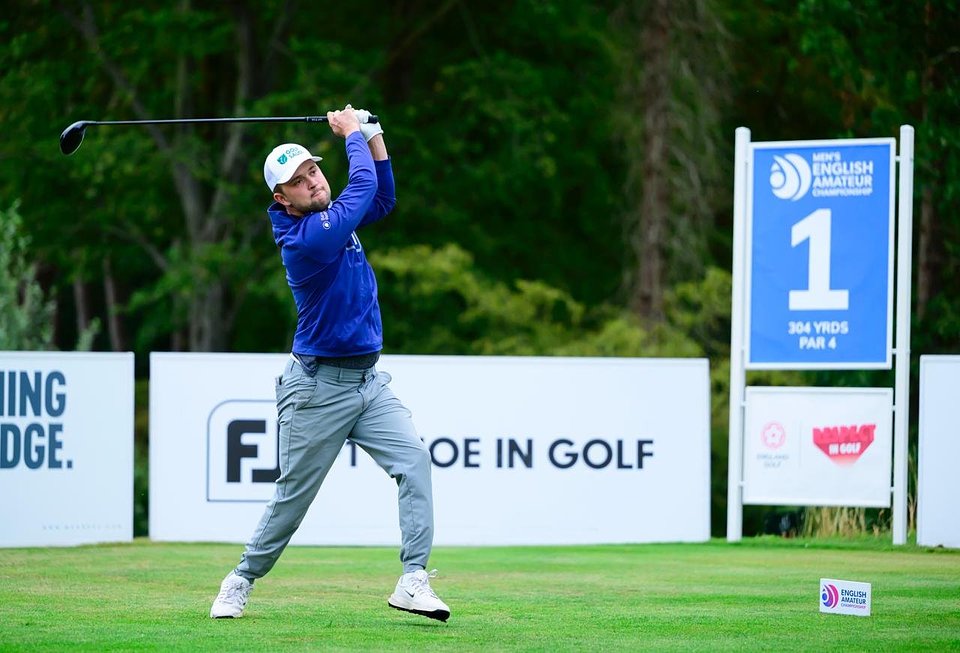
Having firstly made it into the top 64 of the 288 players during the stroke play stages, he went on to show his golfing prowess by defeating four more individuals during the match play stages.
He was 3-up in the semi-final against Morton Bailey, but an incredible five birdies on the back nine saw the match taken to extra holes – where a tough birdie putt for Popert came agonisingly close to booking him a spot in the final. However, Bailey triumphed on the 20th hole to reach the final – where he was beaten by eventual champion Jamie Van Wyk.
Following his tremendous effort, Popert said: “I just want to thank both the golf clubs for hosting this week. They’re in exceptional condition. In the quarter-final, I was 6-under through 10 holes, I was playing the golf I know I can play. And in the semi-final, I think I was maybe 3-under through 12 but I just want to say that Morton played incredible, where I think he birdied five holes from the 12th onwards.”
Even in defeat—his opponent Bailey produced a scarcely believable run of five birdies from the 12th—Popert’s performance was a statement. He didn’t just keep pace with the country’s finest amateurs; he pushed them, stretched them, and proved beyond doubt that he can compete at this level.
Popert’s pride in his achievement was unmistakable, but it was rooted in something deeper than personal success. He explained: “Being a disability golfer, I’m extremely proud. It’s not just happened overnight. I’ve worked so extremely hard. And you can see all the sponsors on me—I wouldn’t be here if it wasn’t for them.”
His journey has been shaped by barriers that today’s emerging players will never face. He added: “There was no England Golf team for me growing up. There now is one for the next generation and I’m extremely proud of that.”
That progress matters. Representation matters. And Popert knows the power of visibility. His run this week wasn’t just a sporting achievement—it was a message.
“I just hope this keeps moving disabled golf forward,” he said. “To compete with these boys is an absolute pleasure. I guess I showed I can compete with them.”
Popert is optimistic about where disability golf is heading, but he is also clear-eyed about what still needs to change. “There’s a lot of positives,” said the Kent golfer. “We’ve got the England Golf team. We’ve got the U.S. Adaptive Open. I just think we need a professional tour.”
The closure of the G4D Tour has left a void at the top of the pyramid—one that Popert believes must be filled for disability golf to keep progressing.
He continued: “The best players in the world are off plus one or scratch with one arm, one leg. They’re exceptionally talented and deserve an opportunity to play this game like women and men do.”
He was 3-up in the semi-final against Morton Bailey, but an incredible five birdies on the back nine saw the match taken to extra holes – where a tough birdie putt for Popert came agonisingly close to booking him a spot in the final. However, Bailey triumphed on the 20th hole to reach the final – where he was beaten by eventual champion Jamie Van Wyk.
Following his tremendous effort, Popert said: “I just want to thank both the golf clubs for hosting this week. They’re in exceptional condition. In the quarter-final, I was 6-under through 10 holes, I was playing the golf I know I can play. And in the semi-final, I think I was maybe 3-under through 12 but I just want to say that Morton played incredible, where I think he birdied five holes from the 12th onwards.”
Even in defeat—his opponent Bailey produced a scarcely believable run of five birdies from the 12th—Popert’s performance was a statement. He didn’t just keep pace with the country’s finest amateurs; he pushed them, stretched them, and proved beyond doubt that he can compete at this level.
Popert’s pride in his achievement was unmistakable, but it was rooted in something deeper than personal success. He explained: “Being a disability golfer, I’m extremely proud. It’s not just happened overnight. I’ve worked so extremely hard. And you can see all the sponsors on me—I wouldn’t be here if it wasn’t for them.”
His journey has been shaped by barriers that today’s emerging players will never face. He added: “There was no England Golf team for me growing up. There now is one for the next generation and I’m extremely proud of that.”
That progress matters. Representation matters. And Popert knows the power of visibility. His run this week wasn’t just a sporting achievement—it was a message.
“I just hope this keeps moving disabled golf forward,” he said. “To compete with these boys is an absolute pleasure. I guess I showed I can compete with them.”
Popert is optimistic about where disability golf is heading, but he is also clear-eyed about what still needs to change. “There’s a lot of positives,” said the Kent golfer. “We’ve got the England Golf team. We’ve got the U.S. Adaptive Open. I just think we need a professional tour.”
The closure of the G4D Tour has left a void at the top of the pyramid—one that Popert believes must be filled for disability golf to keep progressing.
He continued: “The best players in the world are off plus one or scratch with one arm, one leg. They’re exceptionally talented and deserve an opportunity to play this game like women and men do.”
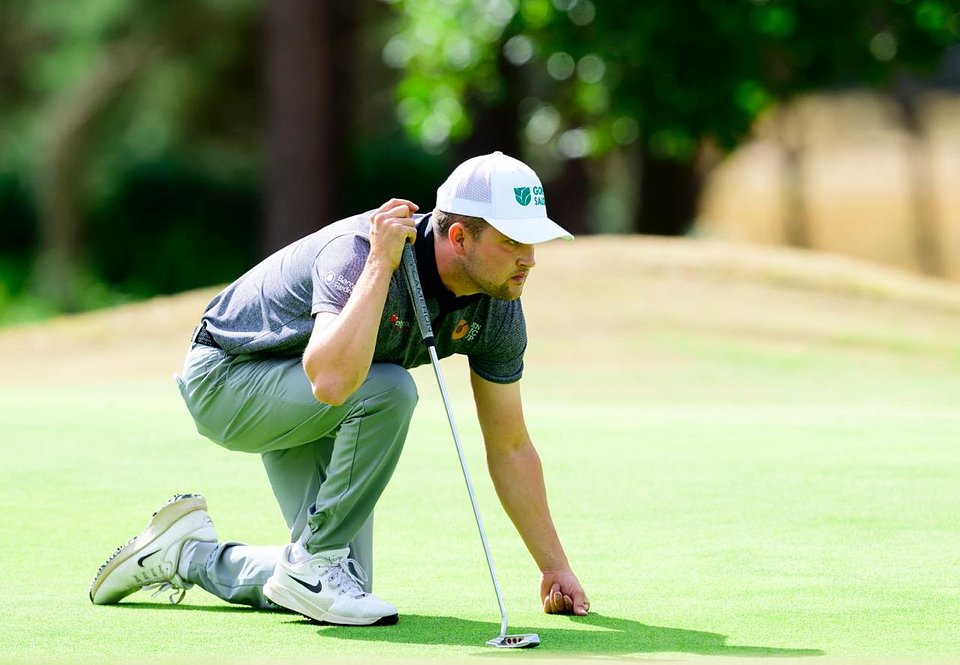
He is determined to be part of the solution. His Kipp Popert World Invitational, held earlier this year, raised an extraordinary £200,000 alongside Variety Golf to support disabled golfers, disabled children, and adaptive players who need financial backing to compete.
He revealed: “I’d love to work with companies to try and keep growing that and make a platform for the best disabled golfers in the world. I’m trying to do every bit and give my life to provide an opportunity for the next generation…This feels right to do.”
Popert’s season is far from over. After a quieter August, he will turn his attention to DP World Tour Q School and Asian Tour Q School—another bold step in proving that disability golfers can thrive on the biggest stages.
His performance at the English Amateur was more than a sporting storyline. It was a moment of visibility, credibility, and inspiration for disability golf. He showed what is possible when talent meets opportunity—and what the sport stands to gain by opening its doors wider.
His semi-final run will be remembered not only for the quality of golf, but for the clarity of purpose behind it. Popert isn’t just chasing his own future.
He’s trying to reshape the future of the game. And after this week, it’s impossible not to believe he will.
He revealed: “I’d love to work with companies to try and keep growing that and make a platform for the best disabled golfers in the world. I’m trying to do every bit and give my life to provide an opportunity for the next generation…This feels right to do.”
Popert’s season is far from over. After a quieter August, he will turn his attention to DP World Tour Q School and Asian Tour Q School—another bold step in proving that disability golfers can thrive on the biggest stages.
His performance at the English Amateur was more than a sporting storyline. It was a moment of visibility, credibility, and inspiration for disability golf. He showed what is possible when talent meets opportunity—and what the sport stands to gain by opening its doors wider.
His semi-final run will be remembered not only for the quality of golf, but for the clarity of purpose behind it. Popert isn’t just chasing his own future.
He’s trying to reshape the future of the game. And after this week, it’s impossible not to believe he will.
ENDS
Contact details:
Tom Vale, Press & Media Manager
Tel: 07912 240850
Email: tom.vale@englandgolf.org
www.englandgolf.org
Contact details:
Tom Vale, Press & Media Manager
Tel: 07912 240850
Email: tom.vale@englandgolf.org
www.englandgolf.org